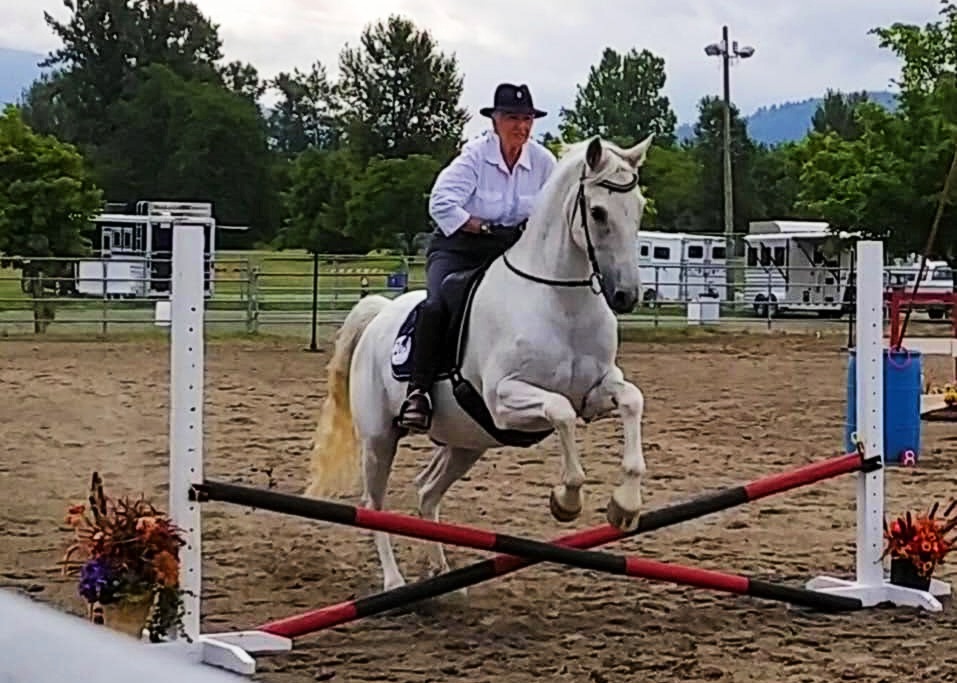
The jump in Working Equitation is relatively small – the key is not about height it’s about willing workability, and a great partnership.
Obstacle Setup: cross rail, simple vertical rail or solid object (such as hay bale). Heights vary per level.
 Gait Requirements and height:
| Introductory: ground pole at walk or trot | Preparatory: 20cm at trot |
| Preliminary: 20cm at trot or canter | Novice: 30cm at canter |
| Elementary: 40cm at canter | Medium: 50cm at canter |
One-Handed & Pole Rules
Novice level and above may carry a pole over the jump riding one handed
 Judges Are Looking For
- Straight, balanced approach
- Regular rhythm
- Calm, willing horse
- Smooth landing and balanced continuation
 Faults
Knocked rail = ZERO score
3 refusals = ZERO score
 Training Tips
Knocked jumps will reduce your score, keep a balanced posture to offer the least resistance to the horse rounding over the jump (keep upright and with the horse movement rather than leaning forward – remember the horse is jumping, not you)
Practice rhythm and straight lines over small jumps
Use ground poles placed a stride before and after jumps to improve effectiveness and rhythm after the jump
Train one-handed jumps with a pole and then progress to holding a pole over the jump. For stability you can lean the pole lightly over your shoulder. (Novice and up)
Jumps offer a greater test of expending higher energy and remaining calm and effective in the work.